Kris Bennell, a third-generation family member with the role of Operations Director at window restoration specialist, ASWS and the current Chairman of the Steel Window Association (SWA) offers his first-hand perspective on the UK’s Heritage Skills gap.
Recent Government announcements suggest that ministers are beginning to recognise the importance of vocational and technical careers in addressing the UK’s growing skills shortages. Unveiled this summer, the Prime Minister’s new education reforms aim to place technical training on an equal footing with traditional academic routes, giving 14-year-olds earlier access to skills education, work experience and employer engagement, while promoting construction and other technical professions as respected career choices. While this change in direction is welcome and long overdue, it must be accompanied by dedicated support for specialist heritage trades if it is to have a meaningful impact on the conservation sector. Without targeted apprenticeships and recognised training pathways for traditional crafts such as window restoration, heritage glazing and architectural metalwork, many of the skills needed to maintain Britain’s historic building stock will remain at risk of being lost.

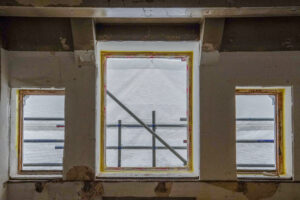
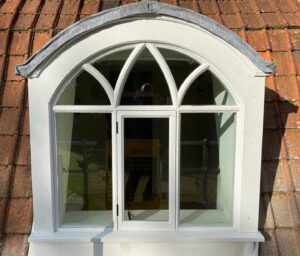
Pictured are two of the three intricate circular domes at 214 Oxford Street, London which ASWS completely refurbished as part of the extensive renovation works in 2025.
Traditional crafts trainees have nowhere to turn
While entry level introductions to subjects such as data analysis and AI are certainly relevant to high tech industries here and abroad, there are sectors of the UK construction industry where there is next to no pipeline of potential recruits gaining the sort of training necessary to replace those who will soon retire from our most traditional trades. And it is these crafts which enable the maintenance and repair of our country’s precious heritage buildings.
These concerns mirror wider challenges facing the UK’s retrofit sector. A recent report from the National Retrofit Hub, highlighted by PBC Today, warned that short-term funding programmes have made it difficult to retain skilled teams and build long-term delivery capacity, calling for a stronger, more coordinated retrofit system capable of supporting future demand.
There exists a glaring gap in the market which has been widening markedly over the past 10-15 years, relating directly to heritage work. While there are probably sufficient courses preparing people to fit aluminium curtain walling, there is seemingly very little in the way of apprenticeships which can impart skills like putty glazing or teach newcomers how to repair and re-patinate bronze-work: trades which ASWS is regularly involved with.
Similarly, there are apprenticeships on offer at colleges across the country which can help youngsters to become perfectly competent carpenters and joiners, but which will not enable them to tackle the restoration of ageing box frames or renewal of heritage glazing systems with new vacuum glazing.
Looking at the problem from the opposite end of the equation, if heritage specialists such as ourselves were to take on a trainee and send them on one of the courses covering aluminium systems, we would then not be able to give them the work experience whereby they can demonstrate their actual skills to the course assessors. In effect, almost nothing that firms like ours routinely do on site is actually ‘captured’ by the existing training bodies.
This not only puts the preservation of historic buildings at risk but also represents a huge potential economic loss to the construction industry and wider economy. The introduction of The Building Safety Act and the roll out of Pre-Contract Service Agreements, along with other lesser factors, have caused a logjam of major projects which have been delayed. In our own case this means a potential pipeline of work stretching out to 2032 which brings the need to recruit further competent staff.
Still hope for heritage skills
Importantly, however, the relevant projects are getting bigger and much more significant in terms of what is to be preserved, with restoration becoming a much larger element to any work on existing buildings. In fact, thanks to the impact of BREEAM and sustainability generally, restoration of existing elements like fenestration is now the first option to be considered by project teams.
Meanwhile, the number of CPDs, webinars and workshops being delivered across the industry is massive – the general knowledge sharing taking places is brilliant and seemingly growing steadily. Unfortunately, these resources are not transcending into the formal training and apprenticeships required.
While we know English Heritage is involved with keeping alive skills like stonemasonry and flint-working – partnering with well-resourced charities – and the SWA’s members continue to nurture metalworking skills applicable to old steel or wrought iron windows, the numbers are just not sufficient to keep up with growing demand. Ideally all the industry’s trade bodies, preferably with Government support, should be adopting a more pro-active stance and encouraging our education institutions nationwide to promote heritage work to their students.
Surely the fact that the timeframe for restoration work on the Houses of Parliament is predicted to stretch out for decades while the budget spirals upwards should be ringing alarm bells amongst our politicians. Investment here could even assist the 15% of youngsters without work or training, find the route into a worthwhile career.
Without adequate training programmes we’re potentially building a House of Cards which could collapse long before the actual work runs out. It needs a joint initiative to push the agenda forward. Through initiatives like this, ASWS continues to support the next generation of construction and conservation professionals – sharing knowledge, championing craftsmanship, and helping bridge the gap between design education and practical delivery.
For more information on the services ASWS offers click here .