Associated Steel Window Services (ASWS) has long been known as a specialist in the restoration of Victorian, and earlier, metal windows, with Operations Director, Kris Bennell being the current President of the Steel Window Association as well as a member of the third generation to run the family firm. However, expertise in the repair and maintenance of other window types, and a true empathy for the key objective of delivering sustainability, have become major strengths of the business over recent years.
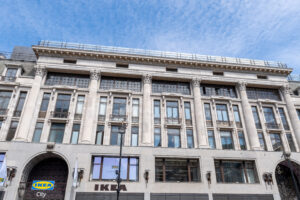
This has not only seen ASWS tackle the restoration of aluminium fenestration and curtain wall systems on several large redevelopment projects in London; the company can now count timber window restoration amongst its key competences. Significantly, this aspect to its service capability not only encompasses traditional joinery skills, and 5-coat decorative treatment, but also now makes use of a specially formulated system of wood fillers which is gaining recognition amongst conservation bodies. In fact, the Repair Care range features strongly on the contract ASWS is currently carrying out for main contractor BAM at 21-29 Glasshouse Street in London.
The ability to rehabilitate ageing sliding sash and other styles of wood window has been a significant part of the company’s offer for more than a decade – featuring in complex projects such as on the Grade II listed Northcliffe House in the Whitefriars Conservation Area, 28 St. George Street in Mayfair and 19-21 Billiter Street in the City. Now, having a growing number of ASWS staff trained by Midlands based manufacturer, Repair Care, has boosted the specialist’s capacity to increase the amount of material that can be saved from going to waste. Inevitably, some window sections will be too badly rotted to retain, but the fully flexible nature of the DryFlex 4, Superfinish and other Repair Care products means on-site repairs move in unison with the seasonal moisture variations which affect both hardwood and softwood.
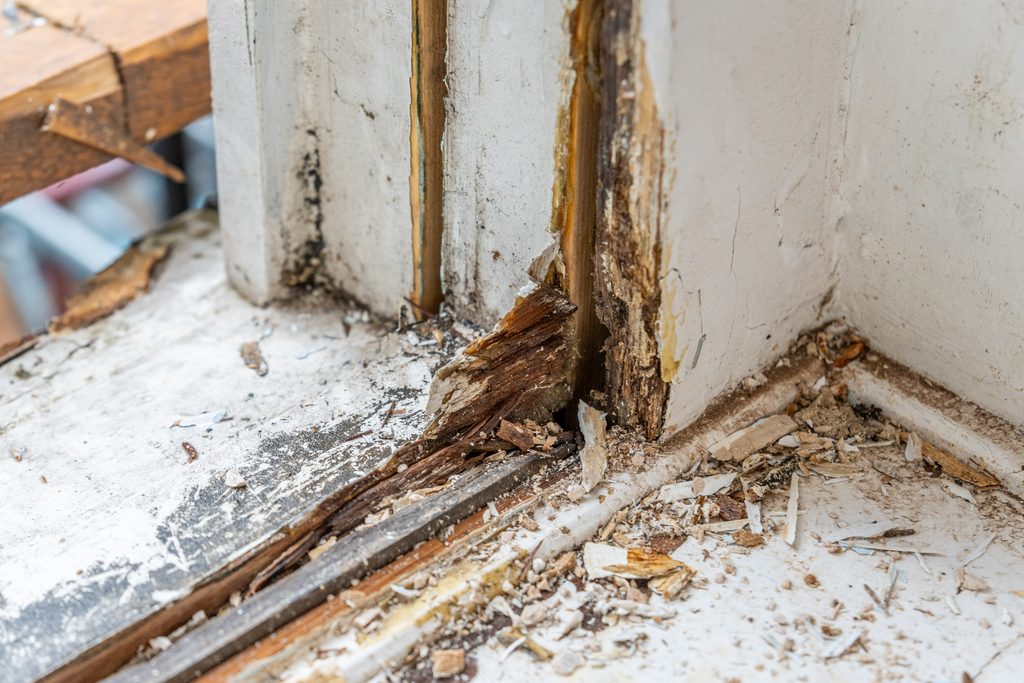
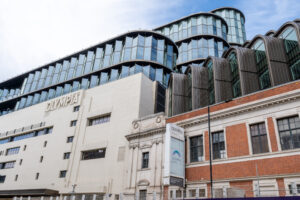
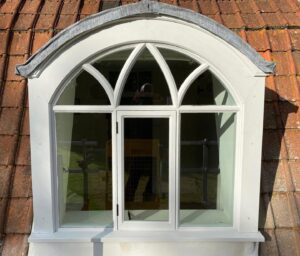
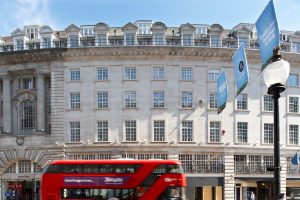
As Glasshouse Street is a Grade II listed building, the Crown Estate is committed to sustainability across its diverse portfolio while also having to ensure the financial viability of its many contracts. It was within this context that BAM was asked to provide costings for renovating the building’s steel atrium windows and the timber dormer level using both a repair strategy, as well improving the glazing system with trim double-glazing elements in the timber windows.
The project team, which also included the project architect, Emerys, and specialist BREAAM consultant, Norman Disney & Young (NDY), concluded that repairing and upgrading both the property’s original steel and timber frames was the best option.
Having previously worked on part of the building in 2014, ASWS was asked by Project Manager, Dendy Byrne, to undertake a rigorous condition survey of the shopfronts as well as all the fenestration types. This encompassing full scopes for various levels of refurbishment, plus comprehensive method statements – leading eventually to successfully tendering for all the window restoration work.
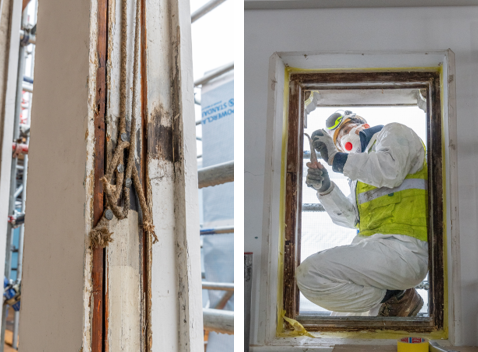
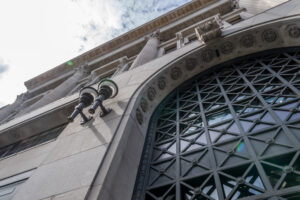
There is a total of 78 steel window frames across the atrium which required realignment and sandblasting as part of the corrosion treatment as well as overhaul of their ironmongery. Generally measuring 2m in height, they varied from 1.6 to 3.0m in width and featured pivot windows.
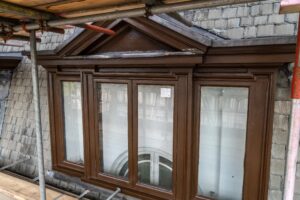
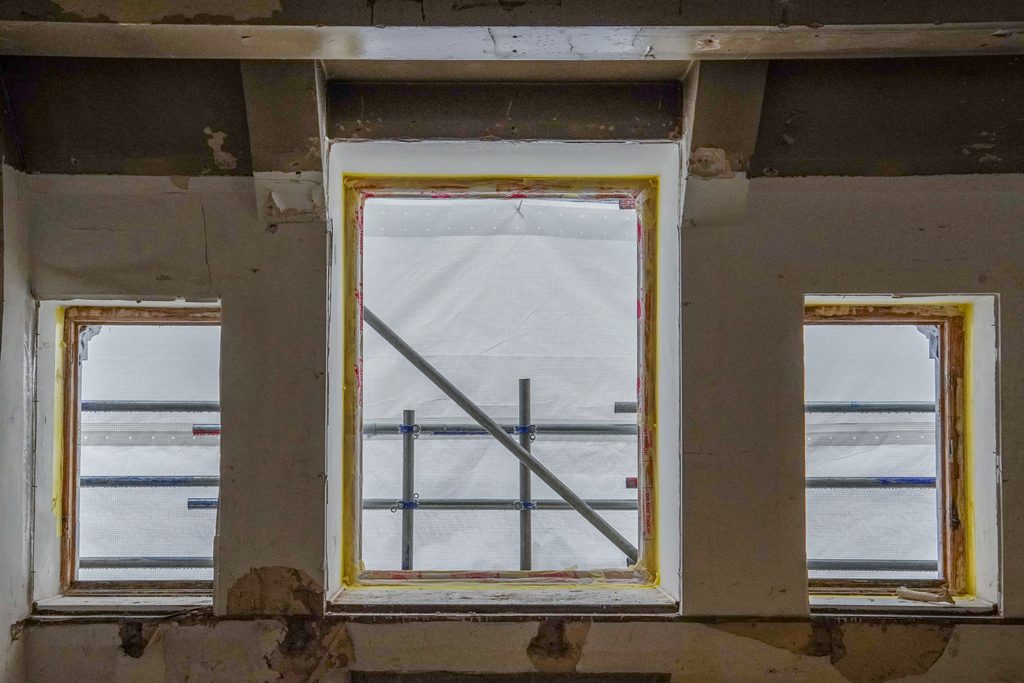
The 43 predominantly side-hung timber windows are located on the 5th and 6th floors. While the frames to these were repaired in-situ by ASWS craftsmen, the opening casements were removed for repair at the company’s off-site premises.
Although repair techniques vary greatly across different window types, the energy performance of fenestration in general benefits from correcting misalignment and replacing or retrofitting effective gaskets to radically reduce air leakage. Installing better performing sealed double-glazed units and modern glazing techniques. Not only will such measures contribute to a project’s overall energy performance as part of its BREEAM assessment, there are also points to be earned through retaining or conserving original building elements like windows, rather than installing replacements.
Operations Director, Kris Bennell reported: “The project itself from the outset was heavily focused on sustainability, and the reuse of the metal and timber frames was of utmost importance. We are replacing all glass to improve thermal performance as well as meeting safety requirements, while all old glass is being fully recycled and turned into glass products such as fibreglass. Our expertise, skill and experience in the restoration of windows greatly assisted us in securing our tender, and it’s projects like this, with the focus on retrofit and reuse, that confirm how London’s refurbishment and retrofit works are booming.”
ASWS is a long-established member of the Steel Window Association and a recognised specialist in the repair and restoration of metal windows, from historic wrought iron through to modern curtain walling. The company also delivers timber and architectural metalwork restoration, alongside surveys, thermal upgrades and workshop-based repairs.
Click here for more information on the services available.