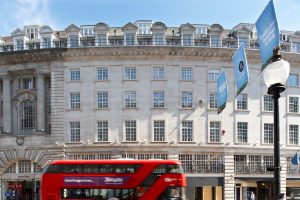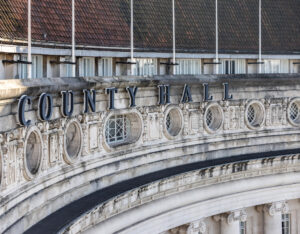
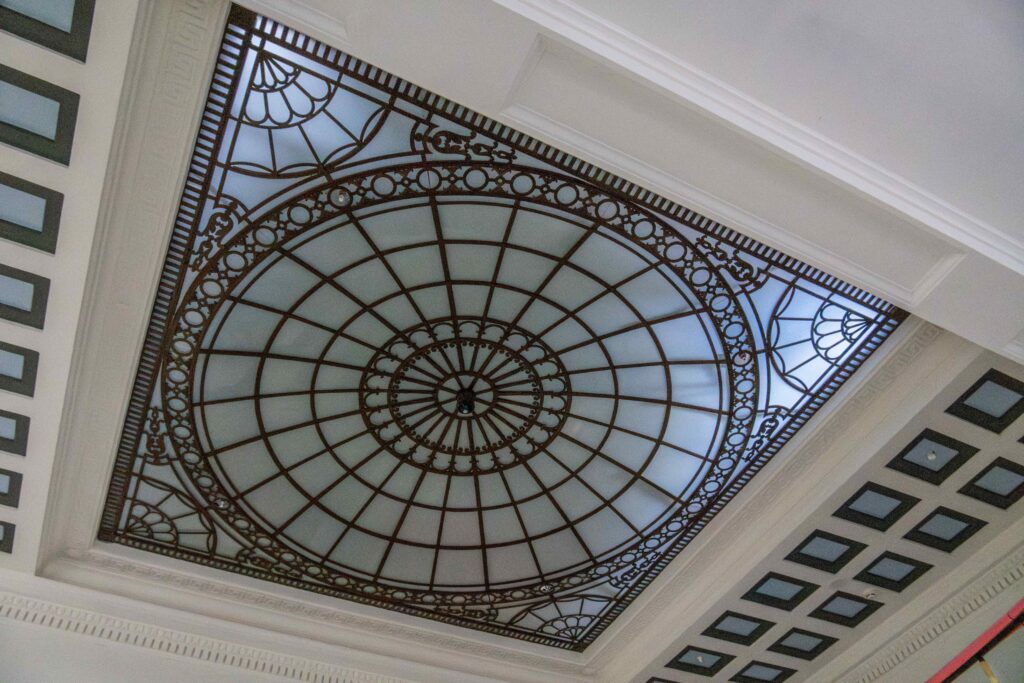
Leading window repair specialist, Associated Steel Window Services (ASWS), employed impressive skills to bear during a two-year refurbishment contract addressing one of London’s best known retail landmarks. Within the project, the trio of shallow domed steel lanterns on an upper mezzanine level presented one of the most difficult challenges, both in terms of technical difficulty and logistical constraints.
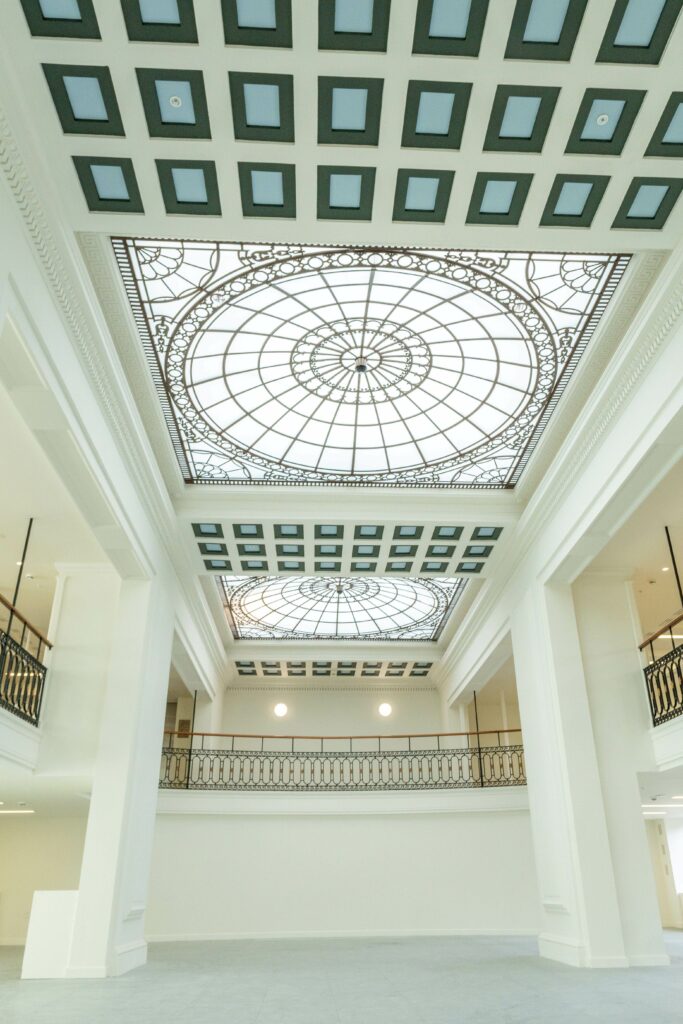
Pictured are two of the three intricate circular domes ASWS refurbished as part of the project.
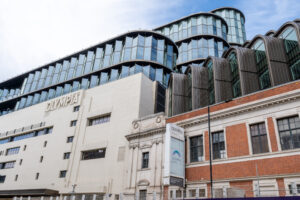
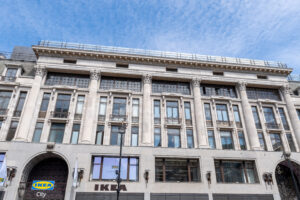
Led by the client’s agent, Avison Young, and main contractor McLaren Construction, the conversion of 214 Oxford Street – the North-East quadrant building on Oxford Circus, formerly occupied by Topshop – into a flagship for Ikea presented the team with all the complications of being Grade II listed. In addition, the property was previously altered and badly damaged by wartime bombing. Long-term weather exposure also played a significant part when the multiple window types across the ornate elevations proved to require extensive remediation.
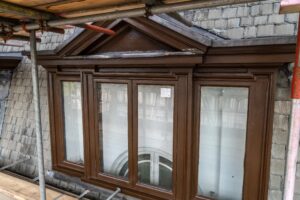
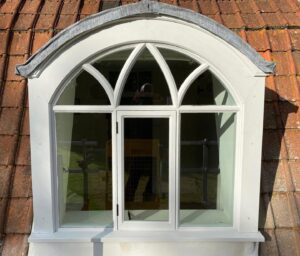
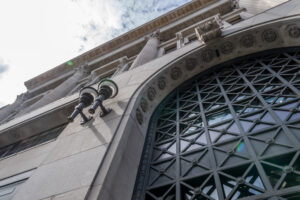
Having initially been called upon by Avison Young to conduct a detailed condition survey of all the steel and timber fenestration, as well as the unique bronze framed shopfronts facing onto the circus, ASWS submitted a successful tender to carry out the multi-faceted work to repair and replicate the fenestration across all the classical French inspired façades. This included restoring a total of 342 steel frame windows, many of which dated from when the Quadrant was built between 1913 and 1928, to the designs of Sir Harry Tanner, the Principal Surveyor of the then London Office of Works. The ASWS package also encompassed tackling 14 large hardwood windows set into a mansard roof, and carrying out complex welding operations to save wrought iron balustrades on the famous frontage.
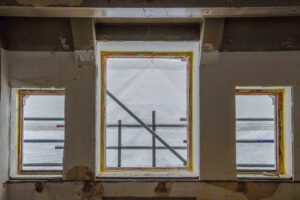
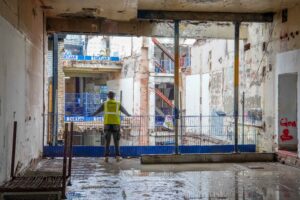
Pictured is the top of the domes, highlighting the very shallow access and logistical problems with glazing the lanterns from above.
However, unseen for generations by anyone not able to access the upper storeys, have been the three lantern lights at Level Four of the building, each one having been assembled in-situ from Medium Universal suite steel sections, with the circular dome structure rising to a height of 700 mm within a 5 x 5 metre square structure. While these would originally have brought illumination to the mezzanine area, decades of rainwater penetration and dust accumulating on the glass had rendered them almost completely opaque.
The Senior Site Manager for McLaren, Jack Wright, commented: “As part of the refurbishment we needed to introduce temporary works to resupport the dome steel whilst we removed the supporting framework and carried out glazing replacement. The glazing then had to be brought back up to modern safety standards. There was a lot of remediation to enable the enclosure to eventually be removed and replaced by an insulated steel structure.
“Every piece of glass had to be templated in plywood and sent away to be remade, before being reglazed in a traditional manner, and eventually repainted. It was a very tight space for them to work in making it logistically difficult. As part of the pricing, ASWS worked closely with McLaren to establish a robust glazing replacement methodology, which included erecting a seven-metre-high scaffold off the slab below, sequenced so that all the different levels of the dome could be accessed as necessary.”
Working from the ‘birdcage’ scaffold, the first task for ASWS was to demount the 148 panes of glass from each dome and meticulously remove the encrusted dirt and lead paint so that the true condition of the steel could be determined. Over a two-week period, every fractured joint was carefully rewelded while any seriously damaged sections were replaced to ensure the whole assembly was stabilised.
Importantly, the reinstated lanterns and their new safety glass feature authentic rebates and edge details, while all the steelwork has received the new five-coat treatment that ASWS utilises on most projects. Involving a full primer and two undercoats as well as two topcoats – both internally and externally – this Five-Star redecoration strategy offers the best standard of adhesion and finish possible for in-situ treatment.
The Senior Site Manager on the project for ASWS, Jamie Levens, reflected: “After fully deglazing the lanterns, scaffold tubes were carefully put up through the framework and a working platform built but, due to the complexity of this and the very restricted headroom, it made movement extremely restricted. Not only did the presence of lead paint restrict us to the use of hand tools while stripping them back, but you also couldn’t stand upright in the roof space because it was so low. Additionally, there was a multiplicity of shaped panes and cut outs within the glass for sprinkler systems and lighting which had to be inserted into the domes. While, where it had originally been putty glazed, the new safety glass was bedded on tape and then silicone.”
Jack Wright concluded: “We always intended to repaint these domes, but the glazing and other repairs were never in the original scope. As a delivery team McLaren and ASWS worked hand-in-hand to address these changes in scope to adapt the necessary access and put a new method into practice. The client continuously gave good feedback to McLaren on the way this scope was executed and commented on the sympathy applied during the refurbishment process. These domes are a exemplary case of what McLaren are able to achieve with the help of our trusted supply chain.”